




Curry Chevrolet - Is the 2027 Chevrolet Traverse or 2027 Ford Explorer Better for Family Space near White Plains, NY?
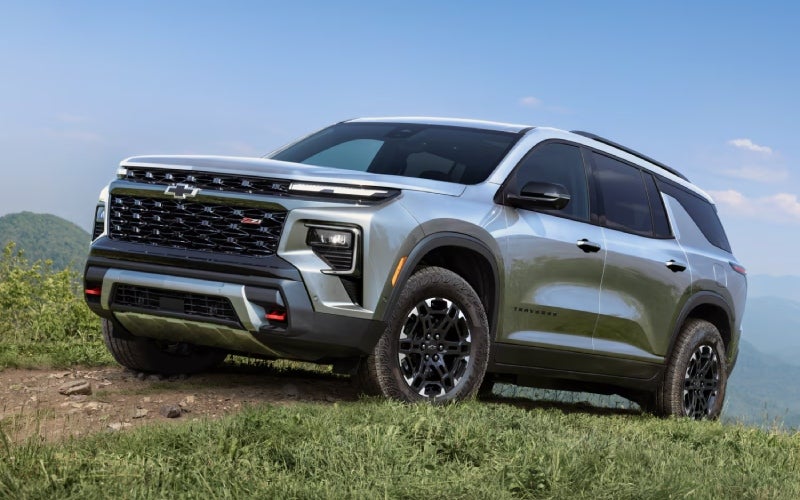
Family SUV shoppers often begin with a practical question: which three-row model makes everyday space easier to use, the 2027 Chevrolet Traverse or the 2027 Ford Explorer? Both vehicles have strong reputations, both offer advanced driver assistance features, and both can tow up to 5,000 lbs when properly equipped. However, when the focus shifts to passenger flexibility, cargo volume, and the small conveniences that matter during busy Westchester routines, the Chevrolet Traverse has a clear advantage for many households near White Plains, NY.
The Ford Explorer is a capable SUV with seating for six or seven, depending on the model and options selected. It offers up to 85.8 cu. ft. of cargo space on Active and ST-Line models, with 85.3 cu. ft. on Tremor®, Platinum™, and ST. Those numbers are useful, and the Explorer also brings strong available performance through its 3.0L EcoBoost® V6. Still, the Traverse is designed around larger-scale family flexibility. It offers seating for up to eight and best-in-class 98 cu. ft. maximum cargo volume, giving it more passenger and cargo capacity than the Explorer. For many families, that difference is not theoretical. It can affect whether a stroller fits with luggage, whether an extra passenger can come along, or whether sports gear can stay loaded without folding every seat.
Why Interior Space Matters in a Three-Row SUV
Space is not only about the largest number on a spec sheet. A useful three-row SUV should make it easy to move people, cargo, and everyday items without turning each trip into a puzzle. In the Chevrolet Traverse, the cabin is arranged to support that goal. Available eight-passenger seating gives families an extra spot compared with the Explorer, while Smart Slide Seats help improve access to the third row. The available power-folding third row and available power-folding second-row seating on RS add convenience when cargo needs change throughout the day.
That flexibility is especially helpful for White Plains-area driving. A family might start the morning with a school drop-off, stop near downtown for errands, pick up groceries, and later load sports bags or music equipment. In that kind of routine, a cabin that adapts quickly has real value. The Explorer remains practical, but its maximum seating capacity is lower and its maximum cargo volume trails the Traverse. Families who frequently carry more passengers or need a broad cargo area will likely appreciate the Chevy’s layout more often.
Traverse Cargo Capacity Compared with Explorer Cargo Capacity
The cargo comparison is one of the simplest reasons to choose the Traverse. Chevrolet lists best-in-class 98 cu. ft. maximum cargo volume, while Ford lists up to 85.8 cu. ft. for the Explorer. That difference gives the Traverse more room for bulky items, stacked bags, home improvement supplies, mobility gear, luggage, or pet crates. It also creates more breathing room when the third row is part of the daily routine.
- Maximum cargo volume: Traverse offers up to 98 cu. ft., while Explorer offers up to 85.8 cu. ft. depending on model.
- Passenger capacity: Traverse offers seating for up to eight, while Explorer offers seating for six or seven.
- Loading convenience: Traverse offers an AutoSense Power Liftgate to help simplify access when hands are full.
- Seat flexibility: Traverse offers Smart Slide Seats, available power-folding third-row seating, and One-Touch Fold automatic second-row seating on RS.
These details make the Traverse feel less like a vehicle that simply has three rows and more like a vehicle built around three-row life. The extra cargo space can reduce the need for a roof box on longer trips, and the extra seating option gives households more freedom when plans change. For families comparing Chevrolet Traverse space with Ford Explorer space, the advantage is easy to understand.
Technology That Supports a Spacious Cabin
A roomy interior becomes even more useful when the technology is easy to see and use. The Traverse includes a standard 17.7-inch infotainment screen, giving the front cabin a high-tech feel without requiring shoppers to move into a higher trim just to enjoy a large display. Wireless smartphone connectivity, Google built-in, and available OnStar® services help support navigation, communication, and entertainment during daily driving.
The Explorer also offers a modern technology experience through the Ford Digital Experience, available BlueCruise hands-free highway driving, and Ford Co-Pilot360® driver-assist technology. Those features are meaningful, particularly for shoppers interested in connected convenience and highway assistance. Even so, Chevrolet’s standard screen size is a major strength. In a family SUV, the ability to easily view navigation, audio controls, vehicle settings, and camera information can make the cabin feel more intuitive. The Traverse also offers available Super Cruise® hands-free driver assistance technology, and RS includes standard Super Cruise® with a 3-year OnStar® Super Cruise plan.
Comfort for Daily Family Driving near White Plains, NY
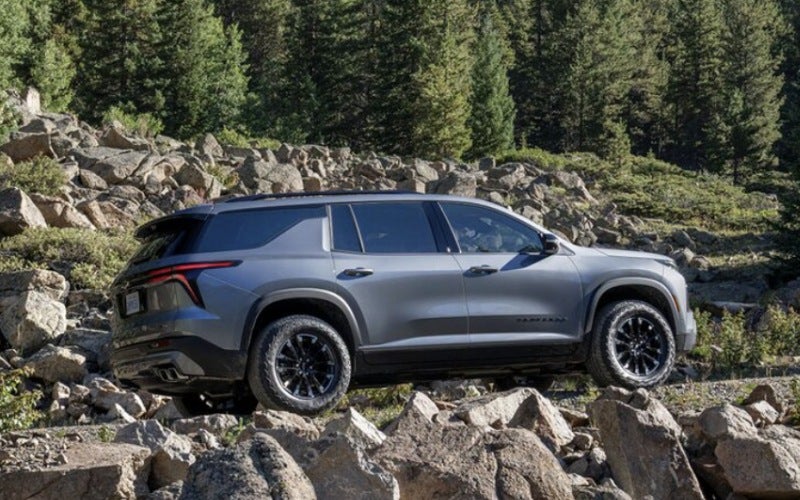
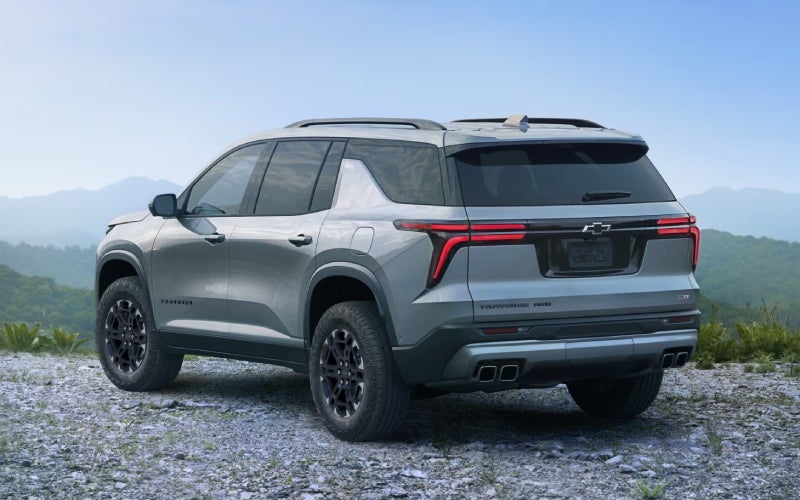
Comfort in this comparison goes beyond seat materials. It includes the ability to get in and out easily, keep the cabin organized, load cargo quickly, and drive with confidence through changing traffic patterns. The Traverse LT, Z71, and RS each bring a distinct personality. LT focuses on trusted comfort, Z71 adds rugged hardware such as an Advanced Twin-Clutch AWD System, Terrain Mode, Hill Descent Control, off-road suspension, and skid plate, while RS adds sporty blackout features, RS badging, a flat-bottom steering wheel, Red décor, and 22-inch high gloss Black-painted aluminum wheels.
The Explorer lineup also has variety, including Active, ST-Line, Tremor®, Platinum™, and ST. Tremor® brings off-road-tuned suspension and a Torsen® limited-slip rear axle, while ST focuses on sport-tuned performance. The difference is that the Traverse pairs its trim variety with a larger cabin and more maximum cargo volume. For a family that wants bold style, confident capability, and more room, the Chevy offers a stronger everyday blend.
Safety and Driver Assistance Confidence
Safety often becomes a deciding factor for families, and the Traverse makes a persuasive case with over 20 standard safety and driver assistance features. Highlighted technologies include Front Pedestrian and Bicycle Braking, Blind Zone Steering Assist, Rear Cross Traffic Braking, Automatic Emergency Braking, and Safety Alert Seat. These systems can help support driver awareness in parking lots, intersections, and multilane roads common around Westchester County.
The Explorer includes Ford Co-Pilot360® driver-assist features and available BlueCruise, so it remains a strong safety technology competitor. Still, Chevrolet’s emphasis on a wide standard safety suite gives the Traverse an appealing foundation. No driver assistance system replaces careful driving, but having more standard support features can add reassurance for households with young passengers, new drivers, or frequent carpool responsibilities.
Frequently Asked Questions:
Does the Chevrolet Traverse have more cargo room than the Ford Explorer?
Yes. The Traverse offers best-in-class 98 cu. ft. maximum cargo volume, while the Explorer offers up to 85.8 cu. ft. depending on model. That gives the Chevy a clear advantage for families who carry luggage, sports gear, pet supplies, or large shopping loads.
Which SUV seats more passengers?
The Traverse offers seating for up to eight. The Explorer seats six or seven depending on configuration. For larger families or frequent carpools, the extra available seat in the Chevy can be a meaningful benefit.
Do both SUVs offer hands-free driver assistance technology?
Yes. The Traverse offers available Super Cruise® hands-free driver assistance technology, while the Explorer offers available Ford BlueCruise. Shoppers should compare compatible road coverage, included plans, and trim availability when choosing.
Which SUV is better for a family near White Plains, NY?
For many families, the Traverse is the better fit because it offers more maximum cargo volume, available seating for up to eight, a standard 17.7-inch infotainment screen, and over 20 standard safety and driver assistance features. The Explorer is capable, but the Chevy delivers more of the space-focused advantages family shoppers often prioritize.
The Bottom Line for Space-Focused SUV Shoppers
If the main question is which SUV provides more practical family space, the Chevrolet Traverse is the stronger recommendation. The Ford Explorer brings performance variety, premium options, and useful technology, but the Traverse offers the roomier and more flexible package for daily life. Its seating for up to eight, best-in-class 98 cu. ft. maximum cargo volume, AutoSense Power Liftgate, large standard touchscreen, and broad standard safety suite make it especially appealing for households that need a three-row SUV to work hard every day.
For shoppers comparing these two SUVs near White Plains, NY, the best next step is to look closely at how each cabin supports real routines. Bring the stroller, sports bag, work gear, or weekend luggage if needed. The Traverse is built to make those moments easier, and that is exactly why it stands out in this family-space comparison.